Signs you have rats, not mice
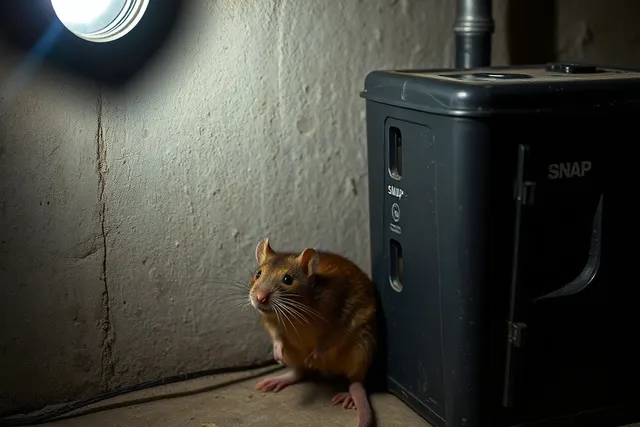
Most calls start with a noise or a dropping, and the first job is telling rats from mice because the treatment is different. In Ohio the rat you are almost always dealing with is the Norway rat, a heavy, ground-dwelling animal that burrows. Roof rats are rare this far north. Norway rats nest low: under slabs, along foundations, beneath decks and sheds, inside crawlspaces and in the cluttered back half of a garage.
- Droppings about three quarters of an inch long, blunt on the ends, often in small piles rather than scattered.
- Dark, greasy rub marks along the bottom of a wall or around a pipe where the same rats pass every night.
- Holes about two to four inches across in soil next to the foundation, a patio slab or the base of a shed, with smooth, packed edges.
- Heavier thumping or dragging sounds in a ceiling or under a floor, usually at dusk and before dawn.
- Gnawed corners on wooden doors, chewed plastic garbage cans, torn feed bags in the garage.
If the droppings are rice-sized and scattered in drawers and along counters, you are more likely looking at mice, which is a separate job covered on our mouse control page.
How rat removal works, visit by visit
Good rat work follows the same order every time. Skipping steps is why people end up paying for bait every month for years.
- Inspection. The technician walks the outside of the house at ground level, looks at every utility penetration, the garage door seals, dryer vent, A/C line set and any gap where a foundation meets siding. Inside, they follow rub marks and droppings back to where rats are entering.
- Trapping inside. Snap traps are set along walls and runways in the basement, garage or crawlspace. Rats are cautious of new objects, so traps are often left unset with bait for a night or two first. Poison is usually kept out of the living space because a rat that dies in a wall creates a second problem.
- Exterior control. Tamper-resistant bait stations or trap stations go along the foundation, locked and anchored, so pets and children cannot get into them. Active burrows are treated or collapsed.
- Sealing. Once activity drops, the holes rats used are closed with materials they cannot chew through: hardware cloth, sheet metal, concrete patch or copper mesh packed under sealant. Expanding foam alone does not stop a rat.
- Follow-up. A second and often third visit checks traps, removes catches and confirms nothing new is getting in.
A typical house takes two to four visits over two to three weeks. Larger colonies under a slab or in a commercial-style detached garage can take longer.
Rat exterminator cost in Ohio
Most Ohio homeowners pay somewhere between $250 and $650 for a rat removal program that covers the inspection, trapping inside, exterior stations and a couple of follow-up visits. Sealing is often priced separately because it depends on how many openings there are and how hard they are to reach.
| What you are paying for | Typical range |
|---|---|
| Rat inspection visit on its own | $100–$250 |
| Trapping program, 2 to 4 visits | $250–$650 |
| Sealing entry points on a typical house | $300–$1,500 |
| Exterior bait station service, ongoing | $35–$70 a month |
| Burrow treatment under a deck or slab | $200–$600 |
The biggest swings come from access (a finished basement with drop ceilings is slower to work than an open one), how long the rats have been there, and whether the job includes rodent-proofing the house. Ask for the trapping price and the sealing price as two separate numbers so you can compare quotes fairly.
Where rats get into Ohio houses
Older Ohio houses give rats more ways in than newer ones. Stone and early block foundations have mortar joints that wear out, coal chutes that were never closed properly, and old sewer cleanouts. Newer homes are tighter but still leak around the garage door corners and the places where builders ran gas lines, water lines and A/C refrigerant lines through the wall.
- Garage door bottom corners, where the rubber seal tears or the slab has settled.
- Gaps around gas meters, hose bibs and A/C line sets where they pass through siding or brick.
- Cracked or missing mortar in older foundations, especially below porches.
- Floor drains and broken sewer lines: rats swim well and will come up a damaged drain line.
- Crawlspace vents with rusted or missing screens.
Rats can fit through a gap about the size of a quarter. If you can push your thumb into it, assume a young rat can get through it.
Is it safe to handle rats yourself?
You can set snap traps yourself and many people do. The trouble is that a household with an established colony usually has more rats than a few traps will catch, and the colony keeps refilling from outside until the entry point is closed. Rats also carry diseases and parasites, so wear disposable gloves, never sweep dry droppings, and spray them with a disinfectant before wiping them up. Our droppings cleanup page goes through the safe way to do that.
Avoid loose poison pellets in the house. Besides the risk to pets, a poisoned rat often dies inside a wall or under a floor, and then you are calling about dead rodent smell two weeks later.
When rats are an emergency
Rats in the yard are a problem to deal with this week. Rats inside the living space, in a child's room, chewing wiring or coming up through a toilet or floor drain are a same-day call. So is any sign they have reached the kitchen or food storage. Call the number on this page and describe what you are seeing; most Ohio calls can get a visit the same or next day.