8 minute read · Updated October 2026
The short answer
For a typical single-family house in Ohio, a complete rodent job (inspection, trapping, sealing the main entry points and follow-up visits) usually lands somewhere between $450 and $1,800 in 2026. A newer house with a few mice and a tight foundation sits at the low end. An older home with rats, a stone foundation and a soiled attic can go well past that once insulation replacement is added.
Those totals are made up of separate line items. Here is how each one is usually priced and why.
Inspection fees
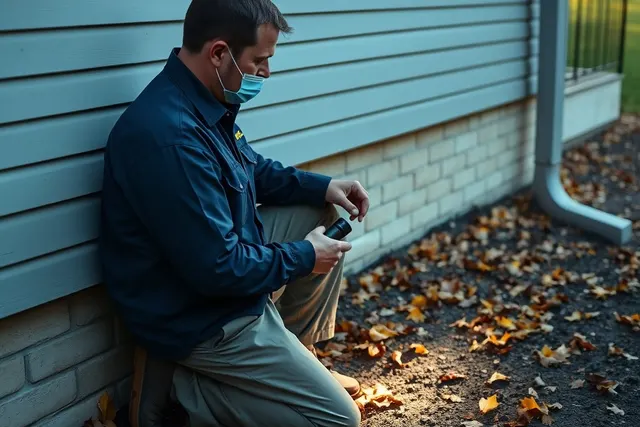
Many companies charge $100 to $250 for an inspection visit, and many credit that amount toward treatment if you book with them. The inspection is the most important hour of the whole job: the technician should walk the outside at ground level, look at the roofline, go into the basement, crawlspace and attic, and show you where the rodents are getting in.
A quote given over the phone without anyone looking at the house is a starting estimate. Expect it to change once someone sees the foundation and the attic.
Trapping programs for mice and rats
Trapping is usually sold as a short program rather than a single visit. A mouse control program on an average house runs $200 to $500 and includes the setup visit plus one or two return trips. Rat removal runs higher, $250 to $650, because rats are more cautious, often need pre-baiting before traps are set, and usually need exterior stations along the foundation as well.
| Factor | Pushes price up when... |
|---|---|
| Number of visits | Activity is heavy or traps need pre-baiting |
| Rodent type | Rats instead of mice |
| Access | Finished basement, drop ceilings, low crawlspace |
| Spread | Rodents in attic, walls and basement at once |
| Timing | Same-day, evening or weekend visit |
Exclusion: the line item that varies most
Sealing a house against rodents is labor-heavy and depends entirely on the building. Ohio has a lot of variety in housing stock, from late 1800s brick in Cincinnati and Columbus to post-war bungalows in inner-ring suburbs to 2000s subdivisions, and the price of rodent proofing tracks that age closely.
- Newer homes on slab or poured basements: often $300 to $800. Gaps tend to be at the garage door and utility lines.
- Mid-century brick and frame homes with block basements: $600 to $1,500, with sill plate gaps, weep holes and old dryer vents to close.
- Pre-1940 homes with stone or rubble foundations: $1,000 to $2,500, sometimes more, because failing mortar and old coal chutes take real masonry work.
- Roofline sealing on two-story houses: an extra $300 to $900 for ladder work at soffits and roof returns.
A good exclusion quote lists each entry point and the material for each. If the quote just says 'seal entry points', ask for the list.
Cleanup and damage repair
Cleanup is quoted separately because it can range from a quick wipe-down to a full attic insulation replacement. Small spot cleanups run $200 to $500. Sanitizing an attic without removing insulation is usually $500 to $1,200. Full removal and replacement of soiled attic insulation is typically $1,500 to $4,000. Details on when each makes sense are on our droppings cleanup page.
Dead rodent removal is its own small job, typically $150 to $450, higher if drywall has to be opened. Chewed wiring should be checked by a licensed electrician and is priced by them.
Monthly and quarterly service plans
Some companies offer ongoing plans with exterior bait or trap stations checked monthly or quarterly. In Ohio these usually cost $35 to $70 a month or $100 to $200 per quarterly visit. They make sense for homes next to fields, woods, creeks or commercial buildings with constant rodent pressure, and for anyone who has had rats more than once.
They make less sense as the only answer to mice already inside. Stations outside do not catch the mice nesting behind your stove.
How to compare two rodent control quotes
- Check that both quotes include the same things: inspection, trapping visits, exclusion, cleanup.
- Ask how many follow-up visits are included and what extra visits cost.
- Ask whether poison bait will be used inside the house. Trapping inside avoids the dead-rodent-in-the-wall problem.
- Ask for the operator's Ohio pest control license number. The Ohio Department of Agriculture licenses commercial applicators.
- Ask the company about their own warranty on sealing work and get it in writing.
Ways to keep the cost down
Book early. Calling at the first sign of droppings in October costs much less than calling in February after mice have spread into the attic. Clear clutter from the basement and garage before the first visit so the technician spends their time finding gaps instead of moving boxes. Store food, pet food and birdseed in sealed bins, which makes trapping faster. And do the easy sealing yourself if you are handy, such as replacing a torn garage door bottom seal, so the paid work focuses on the harder spots.
What a cheap rodent quote usually leaves out
The lowest price is often a single visit: someone sets bait stations or a few traps, collects payment and leaves. That can look like a good deal until the mice are back in three weeks, because nobody looked for the entry points or came back to check. Before choosing on price, check whether the quote includes return visits, whether traps or bait will be used inside the living space, and whether any sealing is included. A slightly higher quote that covers trapping, follow-up and the main gaps usually costs less over a year than a cheap visit repeated every month.
Are there extra charges for emergency or after-hours visits?
Many pest companies charge more for same-day, evening or weekend visits, often an added fee rather than a higher overall rate. It is worth paying when rats are in the living space, a child's room or the kitchen. For mice in the garage or droppings in a basement corner, a next-day or scheduled weekday visit usually saves money without much risk. Ask about any after-hours fee when you call so it does not surprise you on the invoice.