What is making the noise in my walls?
Before anyone sets a trap, it helps to narrow down the animal. Different visitors keep different hours and make different sounds.
| Sound | When | Most likely |
|---|---|---|
| Light, quick scratching and skittering | After dark, through the night | House mice |
| Heavier scratching, thumps, gnawing | Dusk and pre-dawn | Norway rats (in lower walls, floors) or roof rats (rare in Ohio) |
| Running and rolling, like nuts | Early morning and late afternoon | Squirrels in the attic |
| Heavy thuds, chirping babies in spring | Night | Raccoons, which is a wildlife job |
| Fluttering, high squeaks at dusk | Evening, summer | Bats |
This page covers mice and rats only. Squirrels, chipmunks, raccoons and bats are wildlife removal, a separate trade in Ohio with its own licensing and seasonal rules, and the line on this site is for rat and mouse problems.
How mice and rats reach the attic and wall cavities
Mice climb remarkably well. They run up the inside of wall cavities, along plumbing and wiring chases, and up rough brick or siding to gaps at the roofline. In two-story Ohio houses, the space between the first-floor ceiling and the second floor is a favorite highway because it connects everything and stays warm.
Rats tend to stay lower: the basement, the first-floor walls and the floor joists. When you hear heavier sounds overhead in a one-story ranch, the rats are usually traveling along the top of the foundation wall into the ceiling space from a gap near the ground.
- Gaps where the roof of a porch or garage meets the main wall.
- Soffit vents with loose or missing screens.
- Plumbing vent stacks and attic fans that are not sealed at the roof.
- Wire and pipe holes drilled through top plates inside the walls, which connect basement to attic.
How rodent removal from walls and attics is done
- Inspection of the attic, the roofline from a ladder, and the basement where wall cavities start. The goal is to find the route, not just the noise.
- Traps placed in the attic along runways in the insulation, and in the basement at the base of the wall where cavities open up. Opening drywall is rarely needed for live rodents.
- Sealing the roofline and wall entry points with metal mesh and flashing once trapping is under way. See rodent proofing for materials.
- Follow-up visits to clear traps and confirm the noise has stopped. Most people notice a big drop within a week.
- If the attic has a lot of droppings or urine-soaked insulation, an attic cleanup is quoted as a separate step.
Cost to remove mice or rats from an attic or walls
In Ohio, removing rodents from an attic or wall cavities and sealing the way in typically costs $300 to $900. Two-story houses and steep roofs push toward the top because roofline sealing needs more ladder time. If insulation needs to be removed and replaced, that is a larger separate job.
| Job | Typical range |
|---|---|
| Attic and wall trapping, 2 to 3 visits | $250–$500 |
| Roofline and soffit sealing | $300–$900 |
| Opening a wall to reach a dead rodent | $150–$450 |
| Attic insulation removal and replacement | $1,500–$4,000 |
Why the noise sometimes stops, then a smell starts
If someone in the house put out poison and the scratching suddenly stopped, the rodents may have died inside the wall or ceiling. In a warm house the smell usually shows up within a few days and can last weeks. Our dead rodent removal page explains how technicians find the spot without tearing open whole walls.
This is one of the strongest reasons to trap rather than poison when rodents are already inside the house.
Fire risk from rodents in walls
Rodents gnaw constantly to keep their teeth short, and wiring insulation is a common target in walls and attics. Exposed or chewed wiring is a real fire hazard. If the technician finds chewed wires, have a licensed electrician check them before covering anything back up. Mention any lights that flicker or outlets that stopped working when you call.
Two-story, ranch and Cape Cod attics in Ohio
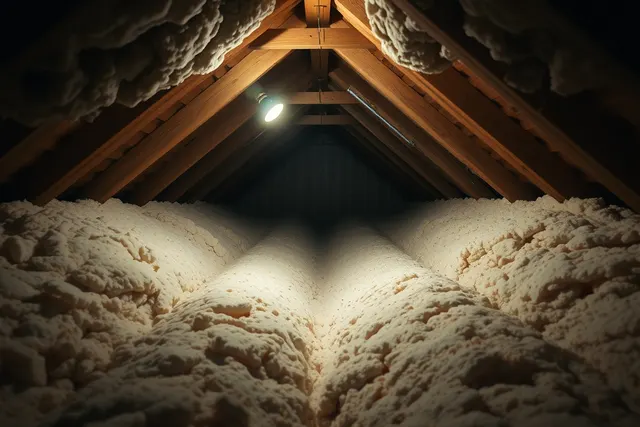
Attic layout changes the job. In a one-story ranch, the attic is usually one open space with blown-in insulation, easy to walk with boards and simple to trap. Cape Cods, very common in Ohio's postwar suburbs, have knee-wall attics on each side of the upstairs bedrooms plus a small attic above. Mice love the knee-wall spaces because they are warm, rarely opened, and run the full length of the house. Each one usually needs its own traps, which adds time.
Two-story colonials and older foursquares often have a small attic hatch in a closet and a lot of insulation over a large floor. Traps are placed along the runways that show as tunnels or flattened paths in the insulation, and near the eaves where rodents arrive from the roofline.