Canton, OH facts that affect rodent control
| Canton fact | What it means for rats and mice |
|---|---|
| Seat of Stark County, home of the Pro Football Hall of Fame and the McKinley memorial | Dense older neighborhoods around downtown, with alleys and detached garages, see the most rat activity. |
| Branches of Nimishillen Creek run through the city | Creek banks and culverts are rat travel routes; homes near them benefit from exterior stations. |
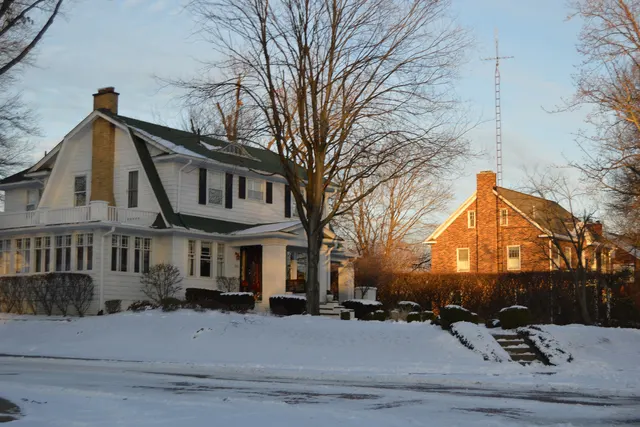
| Historic Ridgewood holds many homes from the 1910s to 1930s | Larger older homes with additions and sunrooms have more joints where rodents get in. |
| Stark County still has active farmland around the city | The corn and soybean harvest in September and October sends field mice into garages on the edge of town. |
City rats, country mice
Canton sits in the middle of Stark County, which is still a mix of small cities, suburbs and working farmland. That puts the city in an unusual spot for rodents. Its older neighborhoods have the dense housing, detached garages and alleys that suit Norway rats, while the fields and woodlots around the city send waves of field mice and deer mice into homes every fall.
Canton homeowners call about both. Rats are more common in the older blocks near downtown and the industrial corridors. Mice are everywhere, and the fall harvest in the farmland around the city tends to trigger a spike in calls in October.
Older Canton housing
Canton grew alongside its steel and bearing plants in the late 1800s and early 1900s, and many of its neighborhoods date from that period. Historic Ridgewood, in the northwest part of the city, is known for its well-kept homes from the 1910s through the 1930s in a range of revival styles. Other neighborhoods around downtown, in the northeast and southeast, are made up of modest brick and frame houses of the same era, many with stone or block basements and detached garages on alleys.
In these homes, the common rodent entry points are the foundation mortar, old coal chutes and basement windows, the joint under front porches, and gaps around utility lines added over the decades. Detached garages along alleys are a frequent base for rats.
Nimishillen Creek and rats
Branches of Nimishillen Creek run through Canton, and like any urban creek, the banks, culverts and storm drains give rats cover and travel routes. Homes near the creek corridors, rail lines and industrial areas tend to see more rat activity than homes in the middle of residential blocks. When rats are coming from a creek bank or a neighboring lot, exterior stations along your foundation and garage catch them before they get in, and sealing makes sure they cannot.
The rat removal page walks through the visit-by-visit process.
Mice after the harvest
Stark County farmers harvest corn and soybeans in September and October, and homes on the edges of Canton, especially toward Plain, Jackson and Canton townships, often see a sudden burst of mice right after the fields come down. Those mice lose food and cover overnight and head for the nearest warm building. Garages and sheds are hit first, then basements and kitchens.
Our guide on why mice come inside in the fall explains the timing and has a month-by-month checklist.
What rodent control costs in Canton
Canton prices tend to be a bit lower than Cleveland or Columbus, but the range depends far more on the house than the city. Mouse programs usually run $200 to $450, rat programs $250 to $600. Sealing an older Canton house, with foundation and porch work, often lands between $600 and $1,500. Larger homes in Ridgewood with complex rooflines and big basements can run higher.
- Ask whether the detached garage is included in the inspection.
- Ask for trapping and sealing priced separately.
- Ask how many follow-up visits are included.
- Ask for the technician's Ohio pest control license number.
Keeping rodents away from a Canton home
Keep trash in carts with lids closed and away from the garage wall. Store birdseed and pet food in metal cans. Clear brush and stored lumber from along the foundation and garage. If you have an alley behind your house, check the base of the garage along the alley side for burrows in spring and fall. And if a neighbor is dealing with rats, mention it when you call, because coordinated treatment on adjoining lots works much better than one house at a time.
Canton rodent calendar
Rodent calls in the Canton area follow the farm calendar as much as the weather. Late September and October bring the harvest spike, when field mice from the surrounding townships move into garages and basements. November through February is steady indoor mouse activity across the city, plus rats sheltering in garages and under porches as the snow piles up. Spring brings outdoor rat activity along creeks and alleys, and homeowners finding winter damage in attics and stored items. Summer is the best time for sealing, since dry weather suits mortar repair and work on porches and foundations.
Planning ahead helps. Homes on the edge of town near fields benefit from sealing in August, before harvest. Homes in the older central neighborhoods benefit from a spring check of garages and alley-side foundations, when rats start digging new burrows.
Historic Ridgewood homes
Historic Ridgewood's homes from the 1910s through the 1930s are larger than most Canton houses, with full basements, generous attics, sunrooms and detached garages. Larger houses give rodents more space and more hidden routes: laundry chutes, closed-off fireplaces, built-in cabinets and long attic runs over sunrooms and porches. Mouse problems here often involve the attic as well as the kitchen and basement.
When having a Ridgewood home sealed, ask the technician to check the joints where sunrooms, porches and later additions meet the original house, along with the roofline. Those transitions are where materials meet and gaps open up over time. Using metal mesh and mortar behind trim keeps the work out of sight on a well-kept historic home.
Canton neighborhoods we cover
- Historic Ridgewood
- Downtown Canton
- Market Heights
- Northeast Canton
- Southeast Canton
- Vassar Park
- Mahoning Road area
- Harrison Avenue
- Lincoln Highway
- Cook Park area