Why rodent droppings need careful cleanup
Mouse and rat droppings and urine can carry bacteria such as salmonella and leptospira, and droppings from deer mice can carry hantavirus. Deer mice do show up in Ohio, especially in garages, cabins and sheds near wooded areas. The main risk comes from breathing in dust when dry droppings are swept or vacuumed, which is why the CDC recommends wetting them down with disinfectant first.
In attics, the bigger problem is often the insulation. Rodents tunnel through it, pack it down and soak it with urine. Packed, soiled insulation loses much of its insulating value and keeps a smell that draws new rodents to the same spot.
When you can clean it yourself, and when to call
A few droppings in a kitchen drawer or along a basement wall are a reasonable DIY job: gloves, a bleach solution or a commercial disinfectant, paper towels and a sealed trash bag. Wash anything that touched food.
Call for a professional cleanup when:
- Droppings cover a large area of attic insulation or crawlspace floor.
- There are nests, heavy urine staining or a strong ammonia smell.
- The space is tight or poorly ventilated, like a crawlspace.
- Anyone in the house has asthma or a weakened immune system.
- You suspect deer mice, for example in a garage or cabin backing onto woods.
How a professional rodent cleanup is done
- The technician wears a respirator, disposable coveralls and gloves.
- Droppings and nesting material are wetted with disinfectant before removal.
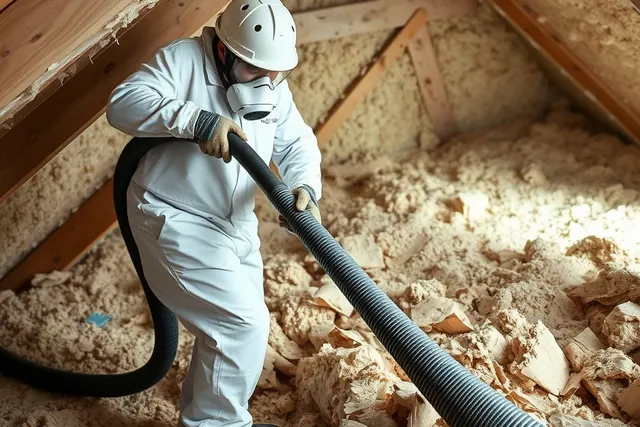
- Contaminated material is removed with a HEPA-filtered vacuum or, for insulation, a high-powered removal vacuum that bags everything outside.
- Surfaces such as joists, sheathing and the attic floor are sprayed with a disinfectant and an enzyme odor treatment.
- If insulation was removed, new insulation is blown in to the right depth.
Cleanup should only happen after the rodents are removed and entry points sealed. Otherwise, new droppings start piling up on clean insulation within weeks. Our rodent proofing page covers that step.
Rodent cleanup and attic insulation replacement cost
| Job | Typical Ohio range |
|---|---|
| Spot cleanup and sanitizing (garage, basement corner) | $200–$500 |
| Attic sanitizing without insulation removal | $500–$1,200 |
| Crawlspace droppings removal and sanitizing | $600–$1,800 |
| Attic insulation removal and replacement | $1,500–$4,000 |
The size of the attic, depth of the old insulation, how much is soiled and how easy the attic is to reach all move the price. Blown cellulose or fiberglass replacement is priced by square foot and depth. Homeowners insurance rarely covers rodent damage, but ask your agent; some policies cover chewed wiring or damage that resulted from it.
Odor after a rodent problem
A lingering musky or ammonia smell after the rodents are gone usually comes from urine in insulation, wood or drywall. Sanitizing and enzyme treatment take care of most of it. If the smell is sweet and rotten instead, there may be a carcass still in a wall, which is a dead rodent removal job.
Garages, sheds and stored items
Garages are often hit hardest because they hold birdseed, grass seed, pet food and cardboard boxes. When you clean out a garage after mice, wet the area down first, throw away anything chewed that touched droppings, and move what you keep into hard plastic bins with lids. Summer clothes and holiday decorations stored in cardboard boxes in the basement or attic are common nesting spots too. If you are still seeing fresh droppings after cleaning, the mouse control work is not finished.
What a rodent cleanup visit looks like
For an attic job, expect the crew to lay plastic sheeting from the attic hatch to the nearest exterior door, so nothing contaminated is carried through the house. Insulation removal is usually done with a large truck-mounted or trailer vacuum: a hose runs from the attic out to the driveway, and the old insulation goes straight into large bags outside. That keeps dust out of the living space and is much faster than bagging by hand.
Once the attic floor is bare, the crew can see things that were hidden: nests, tunnels along the top plates, gaps at the eaves where rodents came in, and chewed wiring. This is the best moment to seal entry points from the inside and have any damaged wiring repaired, before new insulation buries everything again. Ask the crew to photograph what they find so you have a record.
Sanitizing comes next, usually a disinfectant fog or spray over the joists and sheathing, followed by an enzyme odor treatment. New insulation is blown in last, often to a higher depth than the old material, which can improve the home's energy efficiency as a side benefit.
Crawlspaces and basements in Ohio homes
Crawlspaces under Ohio additions, porches and older ranch homes are a favorite rodent hangout, and cleanup there is a different job from an attic. The vapor barrier on the floor is often torn and covered in droppings, and fiberglass batts between the floor joists may be pulled down and nested in. A crawlspace cleanup usually means removing the soiled barrier and batts, sanitizing the soil and framing, and laying a new, heavier barrier.
In basements, the common cleanup spots are behind the furnace and water heater, along the top of the foundation wall on the sill plate, inside stored boxes, and under the basement stairs. These are usually manageable as a spot cleanup if the mice have been dealt with.