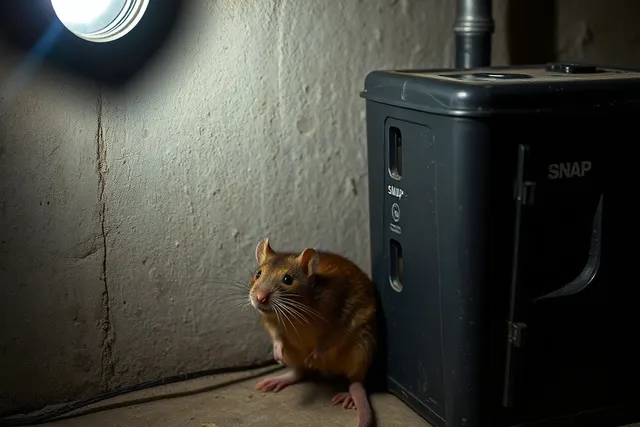
Where rats live on a Cincinnati lot
On a hillside Cincinnati lot, rats usually pick one of a few places. Terraced yards held up by stone or timber retaining walls are the first: the soil behind the wall stays dry, and gaps between stones make ready-made entrances. Second is the space under rear decks and stairs, which on sloped lots can be tall and dark. Third are the cellars and low basements of older brick homes, especially where a stone foundation has lost mortar on the downhill side. In flatter neighborhoods like Northside, Oakley and Madisonville, rats are more often found under detached garages and sheds along alleys.
Rats feed wherever food is easiest: garbage carts left open, bird feeders, compost, pet food on porches, and restaurant dumpsters in business districts like Over-the-Rhine, Northside and Oakley Square.
Steps in a Cincinnati rat job
- Walk the lot top to bottom. On a hillside that means checking retaining walls, terraces, the underside of decks and the downhill foundation wall closely.
- Inspect the cellar or basement for rub marks, droppings and gaps in the stone, and look at floor drains and old cleanouts.
- Set locked exterior stations at the base of walls, along the foundation and by the garage.
- Place traps inside along runways, often left unset with bait for a few nights first so the rats accept them.
- Return in about a week to set or reset traps and check exterior stations.
- Seal once activity drops: repoint foundation gaps, close coal chutes and old windows, screen vents, and close any party-wall gaps in attached homes.
- Final check visit, then optional ongoing station service if the lot borders a constant source of rats.
Rowhouses: rats next door
In attached homes, rats can travel through shared cellars and gaps where floor joists sit in the shared brick wall. You can trap every rat on your side and still have new ones arrive from the house next door. Sealing the party wall from your side, especially around joist pockets and pipe runs in the cellar, cuts that route. Coordinating with your neighbor, so both homes are trapped and sealed in the same few weeks, works much better than taking turns.
Rats and Cincinnati's sewers
In older neighborhoods on the combined sewer system, rats sometimes come into a basement through a cracked lateral and a floor drain. If droppings and rub marks center on a drain or an old cleanout, have a plumber camera the line. A drain cover or backwater valve stops rats from coming up while repairs are arranged. Trapping alone will not fix a sewer route, because new rats keep arriving through the same break.
Cincinnati rat removal cost
For most Cincinnati homes, the trapping portion of a rat job runs $250 to $650. Hillside lots with terraces and retaining walls often need more exterior stations and burrow work, which pushes toward the top of that range. Sealing an older stone foundation commonly runs $800 to $2,500 depending on the amount of repointing. Party-wall sealing in a rowhouse adds roughly $300 to $900. Plumbing repairs for a sewer route are separate.
| Cincinnati situation | Price effect |
|---|---|
| Detached house on a flat lot | Lower end of the trapping range |
| Hillside lot with retaining walls | More stations and burrow work |
| Attached rowhouse | Party-wall sealing added |
| Rats near the floor drain | Plumbing inspection and repair needed |
| Next to a restaurant or commercial dumpster | Ongoing exterior station service often recommended |
Year-round rat activity in southern Ohio
Cincinnati's milder winters mean rats stay busy outdoors more of the year than in Cleveland or Toledo. Burrows along retaining walls and under decks may stay active through December and pick up again in March. That makes spring a good time to deal with yard colonies before they expand over summer, and late summer a good time to seal the house before rats and mice push inside in fall.
What you can do before the visit
Close garbage cart lids and move the carts away from walls and fences. Bring pet food inside. Take down bird feeders for a few weeks or add a catch tray. If rats are near a basement floor drain, cover it with a heavy weight overnight. Do not stuff burrows with rags or pour things into them; it just moves the rats. And keep children and pets away from any burrows you find.
Rat-proofing a Cincinnati cellar
Many older Cincinnati homes have cellars with stone or brick walls, dirt or old concrete floors, and openings that were part of how the house originally worked: coal chutes, small windows at grade, cellar doors from the yard and old drain openings. Each of those is a rat entry point. Rat-proofing a cellar typically involves repointing gaps in stone with mortar, covering cellar windows with hardware cloth or replacing them, closing coal chutes with sheet metal or masonry, fitting a tight cellar door with a metal kick plate, and covering floor drains with a rat-proof grate.
If the cellar floor is dirt in places, rats can burrow straight in under the wall. A concrete skim or a buried wire mesh layer stops that. This kind of work takes a day or two on a typical rowhouse cellar and is one of the best long-term investments for an older Cincinnati home with recurring rats.
Read the full rat removal overview for Ohio or go back to rodent control in Cincinnati.