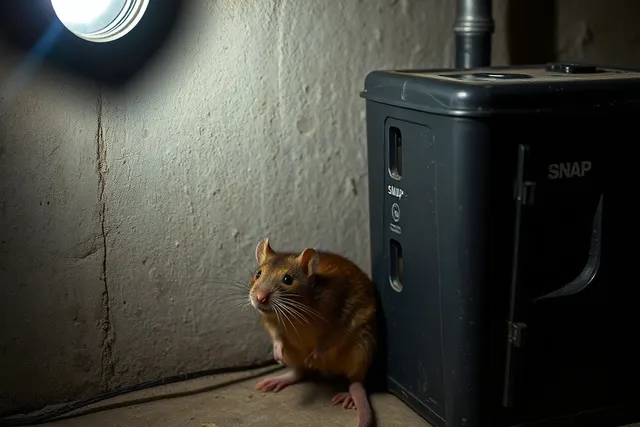
Where Cleveland rats usually live
Cleveland's rats are Norway rats, and they are ground animals. On a typical city lot that means three zones. The first is the strip of soil along the foundation of the house, especially under the front or back porch where the ground stays dry. The second is the detached garage, which on most Cleveland lots sits at the back near the property line with a slab that has cracked and settled over the decades. The third is the shared space between lots: fence lines, overgrown corners, abandoned sheds and, on some streets, a vacant lot where a house used to be.
A colony usually burrows in one zone and feeds in another. Burrows under a garage slab with rats feeding at the neighbor's bird feeder is a very common pattern on the west side. On the east side, where demolition has left more open lots, colonies often sit in the overgrown lot and move into the houses on either side when the weather turns.
How a Cleveland rat removal job usually goes
- First visit, about an hour to ninety minutes. The technician walks the lot, finds burrows and runways, checks the garage slab edges and the base of the house, and goes through the basement looking at the foundation, the floor drain and any old coal chute or window well.
- Exterior stations go in along the foundation and garage, anchored and locked. Burrows near the house are marked so activity can be tracked.
- Inside, traps go along basement walls on the runways, often left unset with bait for the first few nights because rats avoid anything new.
- Second visit about a week later: traps are set or reset, catches removed, burrows checked for activity.
- Sealing happens once activity drops: mortar gaps, the coal chute, gaps around the gas and water lines, the garage door corners and the garage slab edge if rats are getting under it.
- A final check visit confirms nothing new is getting in.
From first call to last visit, three weeks is typical for a Cleveland single-family house. A double or a house next to an active vacant lot can take longer.
The sewer question in older Cleveland houses
In older Cleveland neighborhoods, rats sometimes reach basements through the sewer lateral rather than through a wall. Clay tile laterals from the early 1900s crack and separate at the joints, and rats can travel along a damaged line and come up at a floor drain or an old cleanout. Signs that point this way: rat activity concentrated around the floor drain, droppings near the laundry tub, or a rat seen in a drain or toilet.
When that is the case, trapping alone will not end it. The fix usually involves a plumber running a camera through the line, a backwater valve or drain cover, and repairing the break. The regional sewer district maintains the public sewers, but the lateral from your house to the main is generally the property owner's responsibility, so it is worth checking with your insurance about sewer line coverage.
What a Cleveland rat job costs
Most Cleveland homeowners pay $250 to $650 for the trapping portion of a rat job. The price climbs with the number of exterior stations needed, the number of visits and whether the detached garage needs its own setup. Sealing an older foundation is quoted separately and often runs $600 to $1,500 on a pre-war house, more where there are several old openings or the mortar is failing along a whole wall.
| Cleveland situation | What usually changes the price |
|---|---|
| Single-family, rats in basement only | Lower end of the trapping range |
| Rats in house and detached garage | Extra stations and garage sealing |
| Next to a vacant lot or recent demolition | More visits, longer exterior station service |
| Rats near the floor drain | May need plumbing work in addition to trapping |
| Two-family house | Both units and shared basement treated together |
What you can do while you wait for the visit
Keep the garbage cart lids shut and the carts off the garage wall. Pull any birdseed, grass seed, dog food or chicken feed out of the garage and into metal cans with lids. If rats are near the floor drain, put a heavy drain cover or a weighted bucket over it overnight. Keep pets away from burrows and do not try to flood them; it usually just moves the colony a few feet. Avoid putting out loose poison in the basement; a rat that dies inside a foundation wall in a Cleveland house can be very hard to reach.
If your neighbors are seeing rats too, it is worth mentioning when you call. Coordinated work on two or three lots clears a colony much faster than treating one house at a time.
Keeping Cleveland rats from coming back
After the colony is trapped out and the holes are sealed, the goal is to make your lot less appealing than the one next door. Keep garbage carts closed and away from walls, fix any leaky outdoor faucet so there is no standing water, trim overgrown shrubs back from the foundation, and stack firewood or lumber off the ground. If you feed birds, use a seed tray and clean up spillage. Many Cleveland homeowners keep two or three locked exterior stations along the garage and foundation for a season after a rat job, checked monthly, as an early warning if new rats move in from a neighboring lot.
Read the full rat removal overview for Ohio or go back to rodent control in Cleveland.